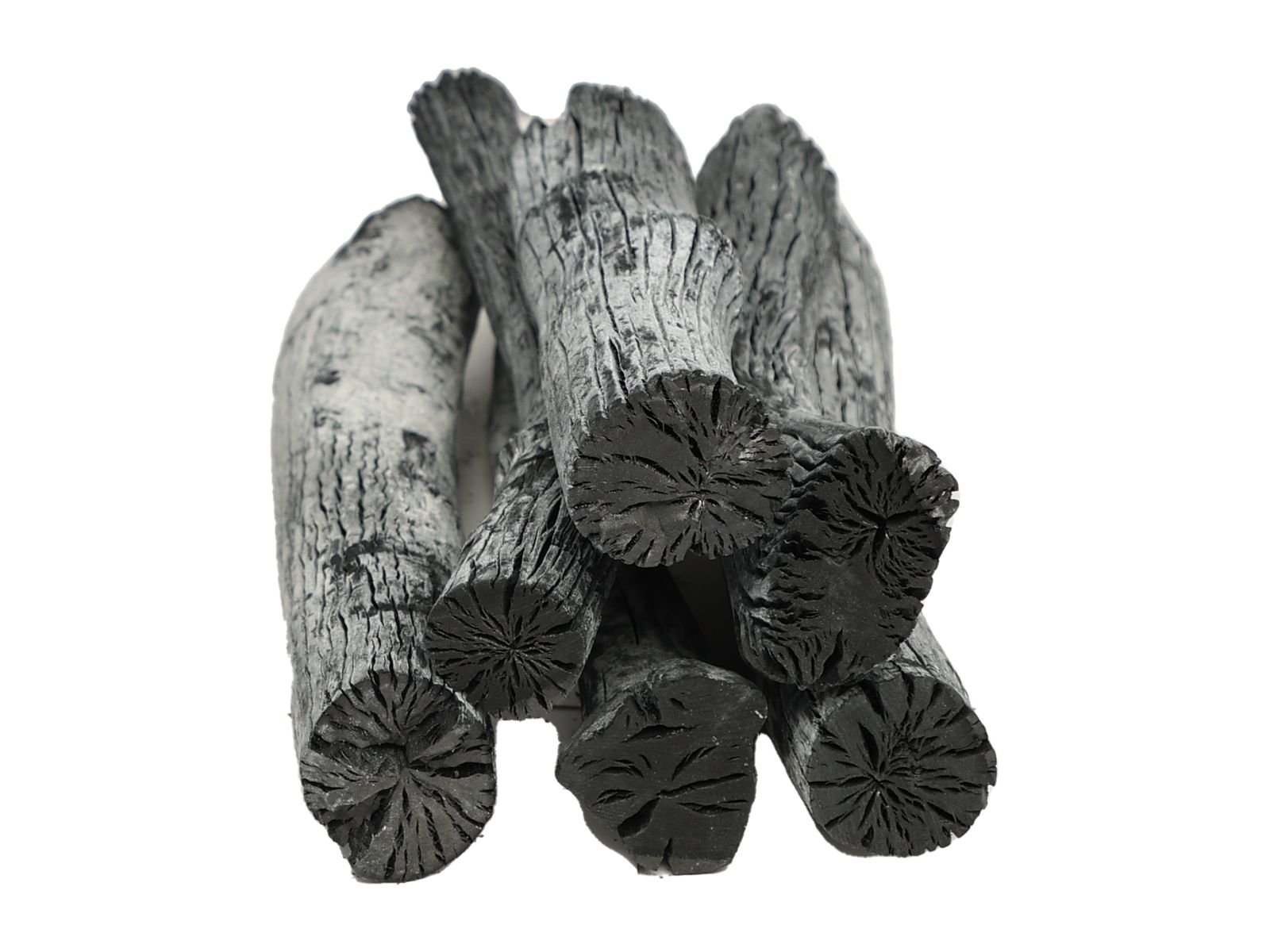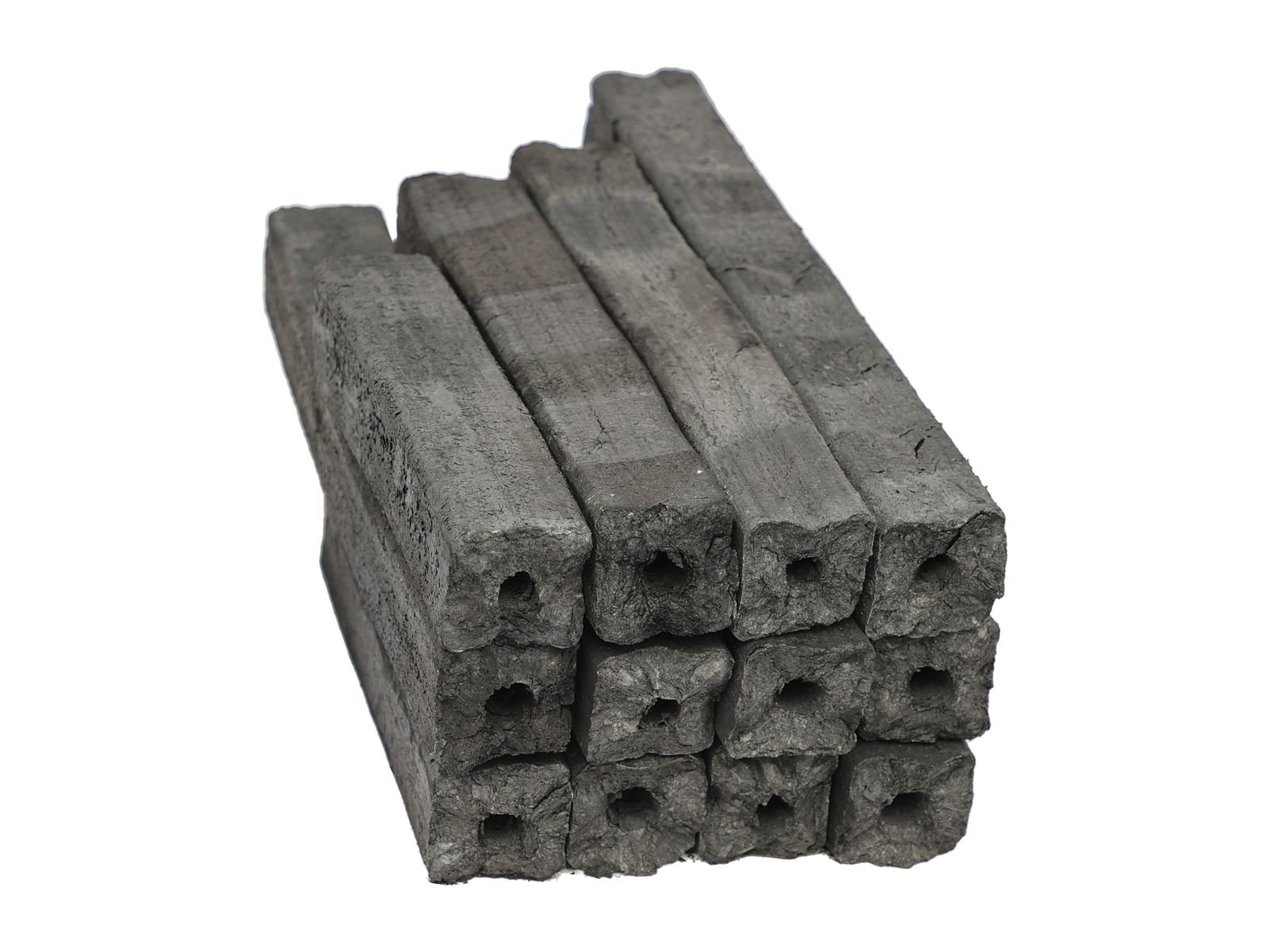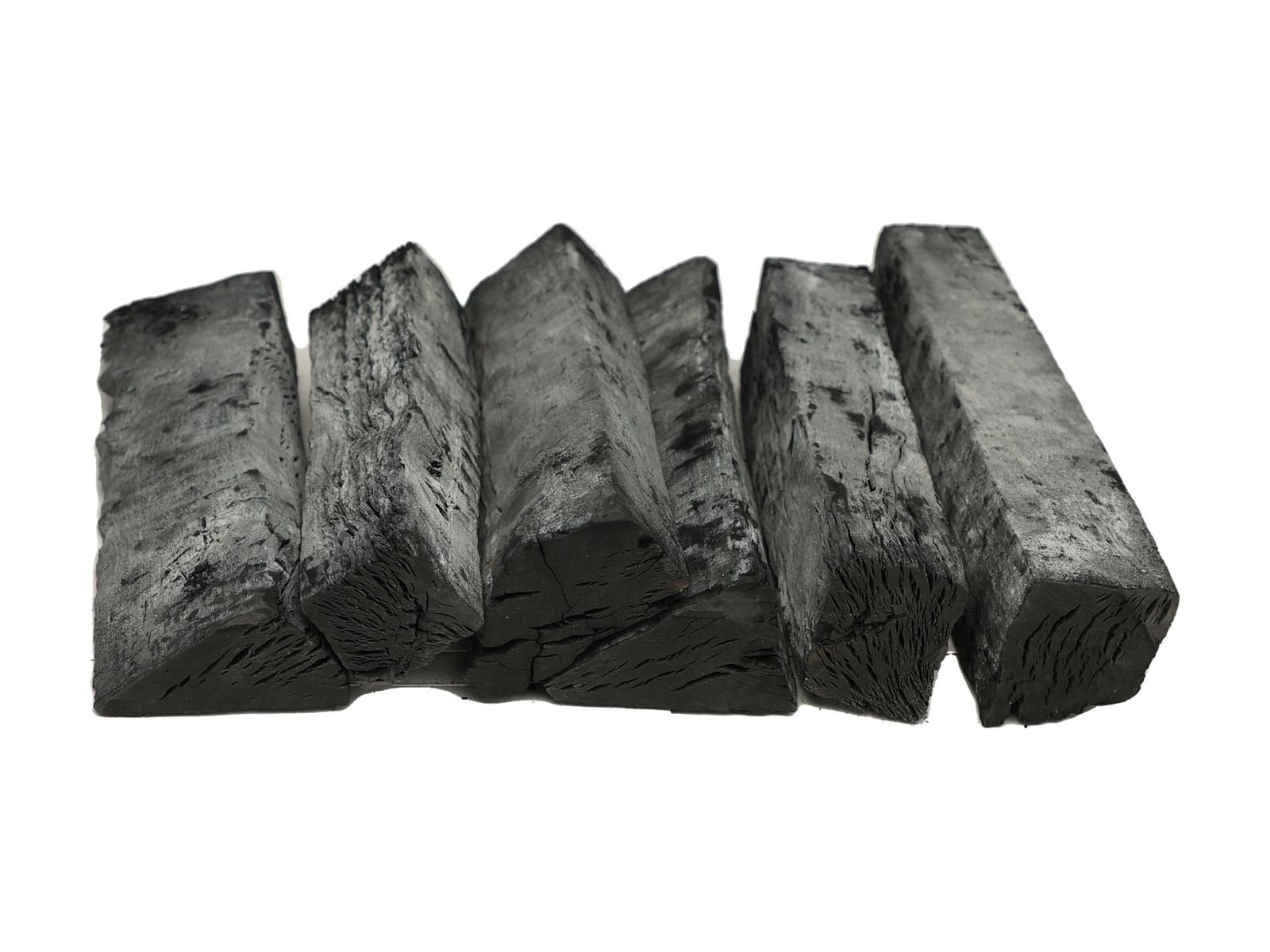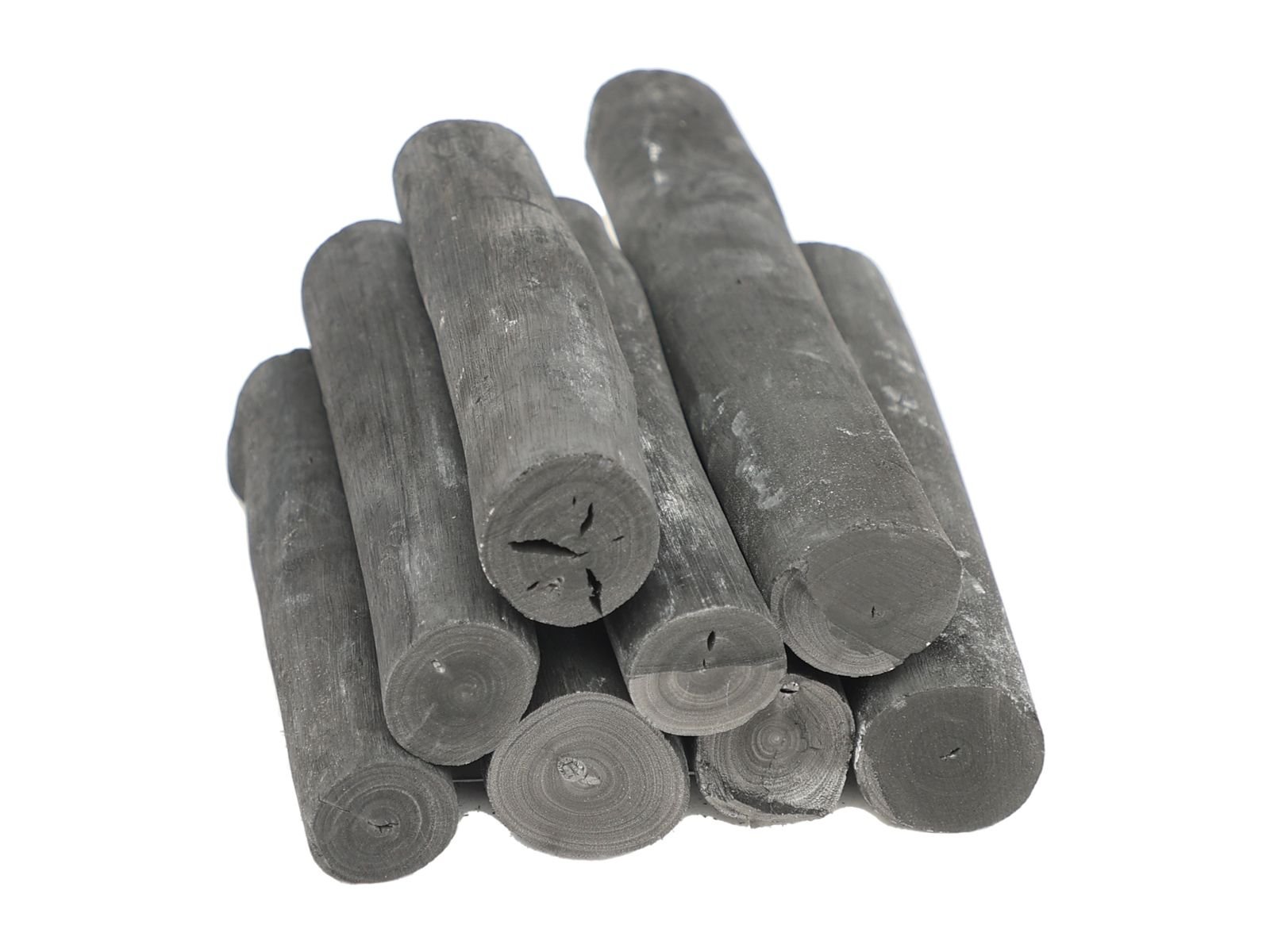
Binchotan is a type of white charcoal that originated in Japan. The name is used today for any hardwood charcoal made with the same method: carbonized slowly, refined at very high heat, then pulled out of the kiln and smothered.
Why it is called white charcoal
At the end of the kiln cycle the vents are opened and the wood burns bright. The glowing charcoal is raked out and covered in a mix of ash, sand and earth. This cools it quickly and leaves a pale grey coating on the surface. The result is harder, denser and higher in carbon than black charcoal.
What buyers notice
- It rings like metal when two pieces are tapped together.
- It is slow to light and needs a gas burner or chimney starter.
- Once lit, it burns for hours at a steady heat with very little smoke.
- It can be put out in a sealed pot and relit later.
Who buys it
Yakitori bars, robata grills, Korean BBQ restaurants and high-end steak houses. Some home and lifestyle brands also sell small pieces for water and deodorizing.
Vietnamese binchotan
Vietnam produces white charcoal from local hardwoods using the same smothering method. Our product pages list the grade, piece length, fixed carbon and ash for each line.